
Viewing entries tagged
design
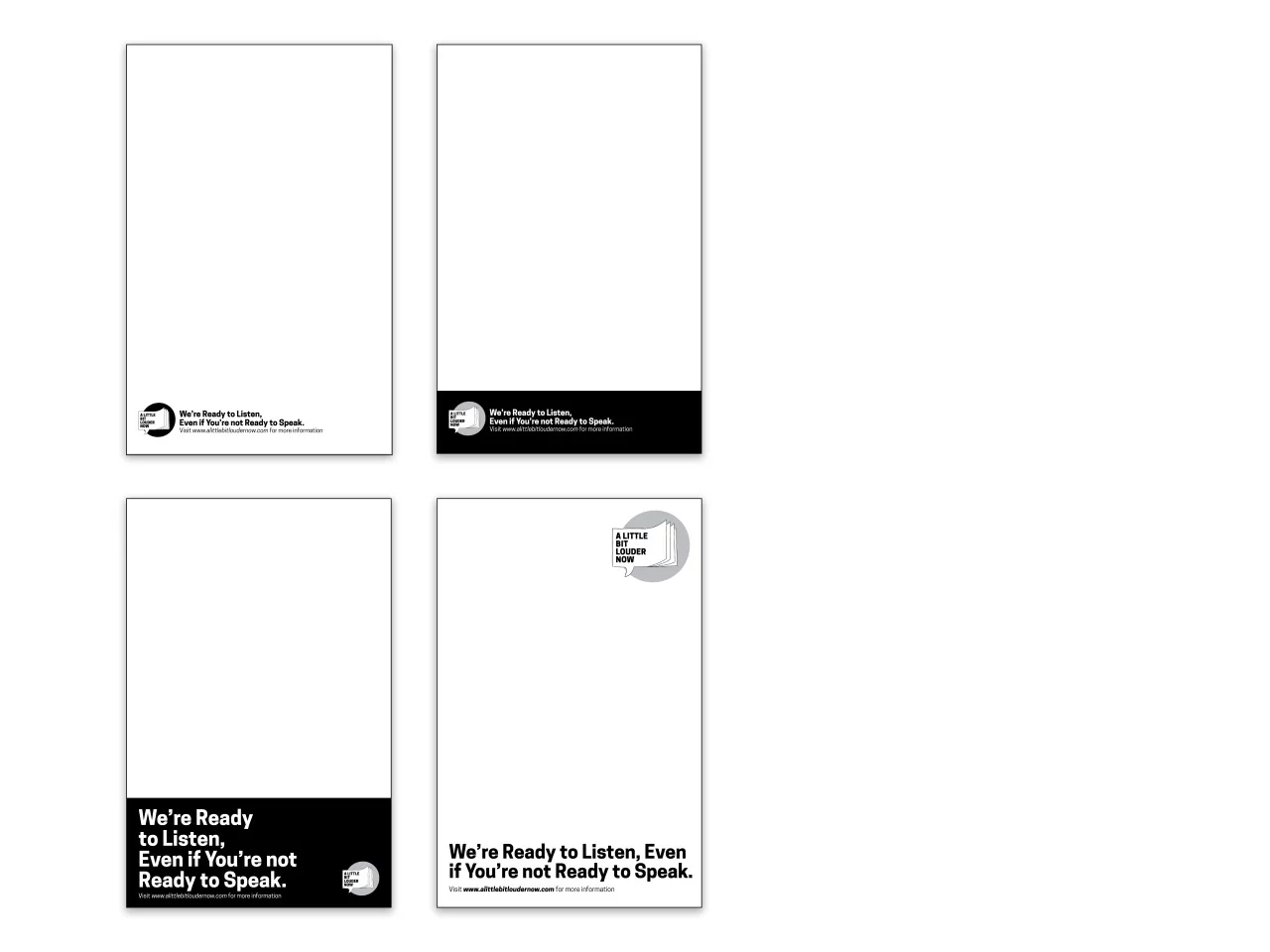
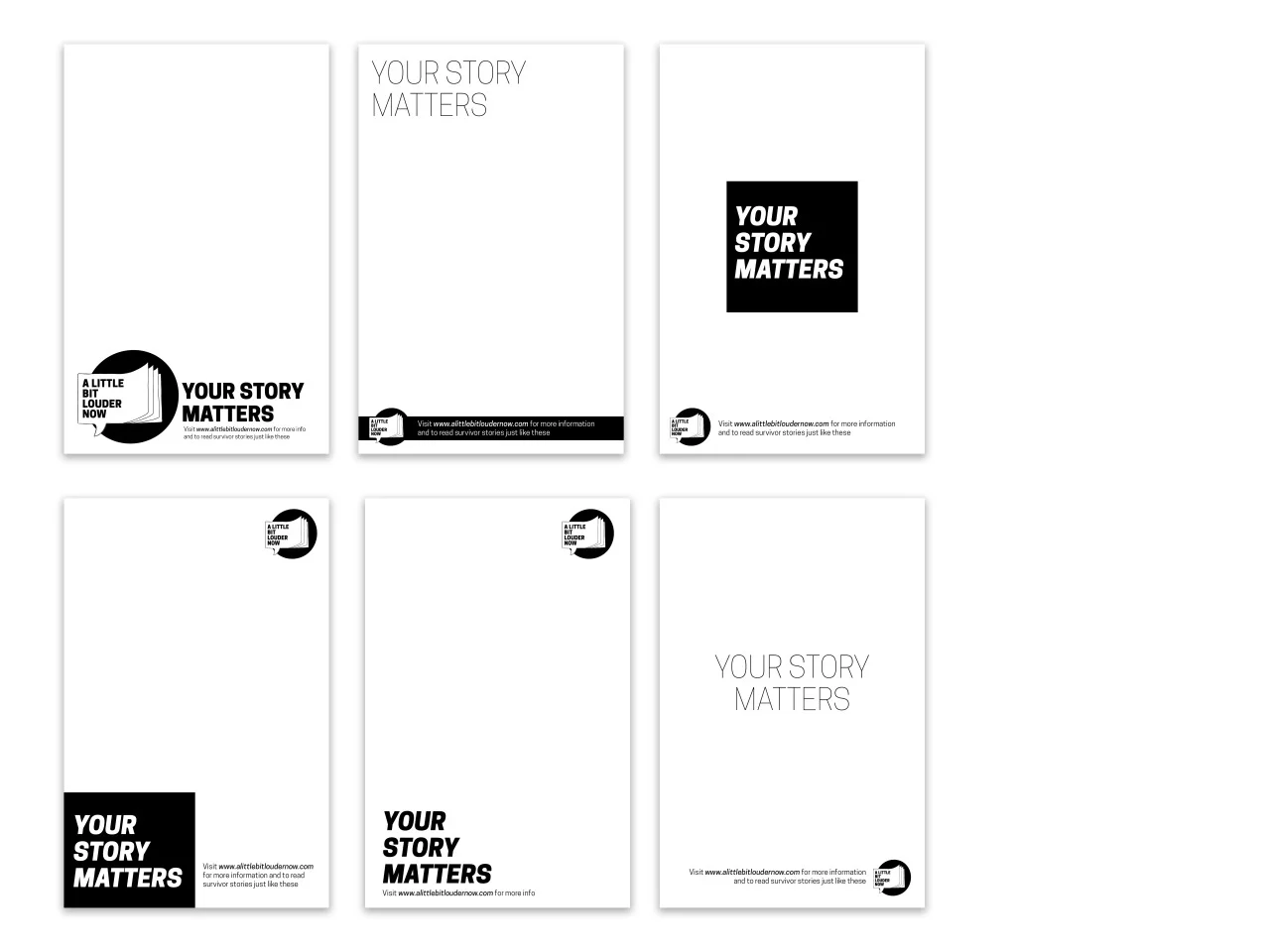
Playing with some layout/look & feel options for the poster workshop templates. The templates should be simple and the message/text straight forward - to contrast to the likely complexity of the collaged words and images the workshop participants will create.
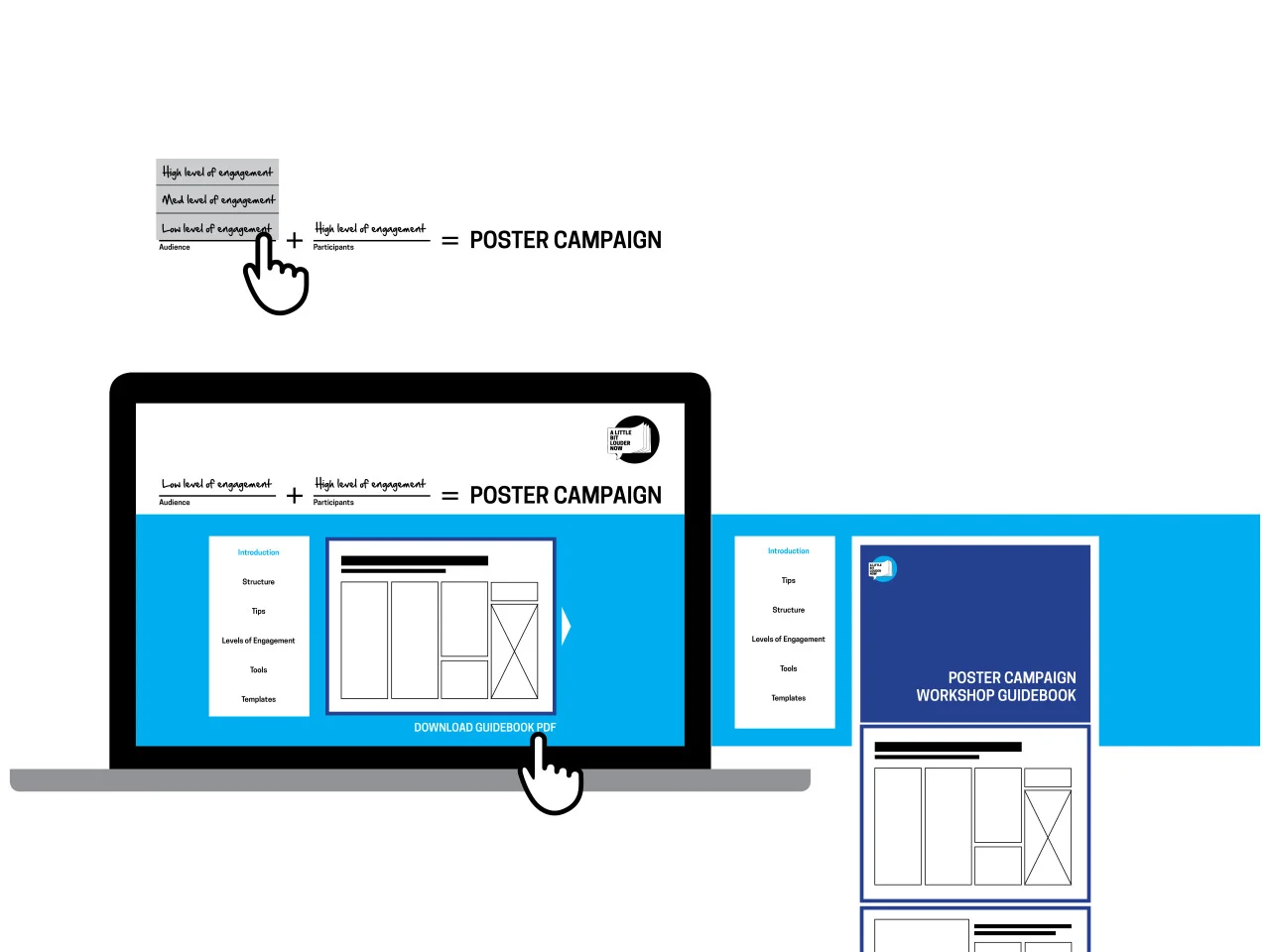

The two studies look at ways in which an advocate user can narrow down what kind of workshop she’d like to facilitate. The first option is simplified and easy to figure out, but the second option provides a matrix method in order to see all of the different options available.

Playing around with the idea of a system that facilitates storytelling where, as the user moves through each touchpoint, the audience and stories are growing.
I did everything you were supposed to do, twice, and the system failed me in two separate spheres.
A compelling survivor story regarding the necessity for the collection of survivor stories. Oftentimes, survivors are willing to share their stories and report their experiences to the police or to the university, but the current systems in place that are set up to help survivors are flawed. Instead of providing a survivor-friendly environment, the systems notoriously harbor environments where survivors are blamed, questioned, and doubted. I will be meeting with members of the campus police department in January to pinpoint where the system is failing.
We did it. Val and I presented our thesis proposals in front of the graduate students and faculty. I’m pretty sure I’ve never been more nervous in my entire life.
Even though the presentation didn’t go as well as I hoped, it was good practice for the final presentations in the Spring. I’m excited to move forward with this project and start making things. Below are the comments I received from the faculty that I will be processing over the winter break and incorporating into the evolution of this investigation.
Who is the user for this When you come to college there is a need to know Is this an orientation program? —Kermit
You are focused on the 60% act. What’s the extent of what you are going to be talking about in the final? App-related? Over-time? Programing, face to face contact with advocacy groups? —Scott
I think you really need to map all of that to understand how the existing systems work, and through interview find out where they are flawed. And find out what are the deficiencies —Denise
Can you evaluate an existing intervention that take someone through the David Rose (i.e. Ready to know, etc.) Find a place between the steps that are crucial to moving people along the gradient. Has everyone ever done that work on David Roses matrix, going from step 1 to step 2 —Deb
David rose looks at the channels of communications, there is a huge group of not ready to know. If you’re making a decision on where to position a campaign, and you look at direct mail, the not ready to know wouldn’t be ready to encounter this information. It might be good to find where people get their communication and information. Maybe they are getting it an orientation and not sitting down searching it on the web. The likelihood of encountering along the path. —Meredith
What is the potential to expand this to other victimized groups, is it focused just on 18-24, or could it extend as a model beyond? —Russell
You begin thinking about what about this is a framework for a class of problems that have certain characteristics —Meredith
Are you planning on talking to any survivors or offenders? —Lu
Take a look at the Bill Cosby issues happening right now, the analysis of survivors stories, what makes their stories believable —Deb
Notion of a reflection space, how does your system overcome that, is it a week, two weeks, years —Kermit
When after the event happens is the usual moment of reporting? That is a body of statistics to break apart and understand, timeframe could be interesting analysis —Deb
What is consent? That would be something else to look at in the stories. How are those terms that are in the law different for people that are living it. You didn’t mention the parents, somewhere in your matrix of six, your parents can be critical catalysts to get that story out —Kermit