
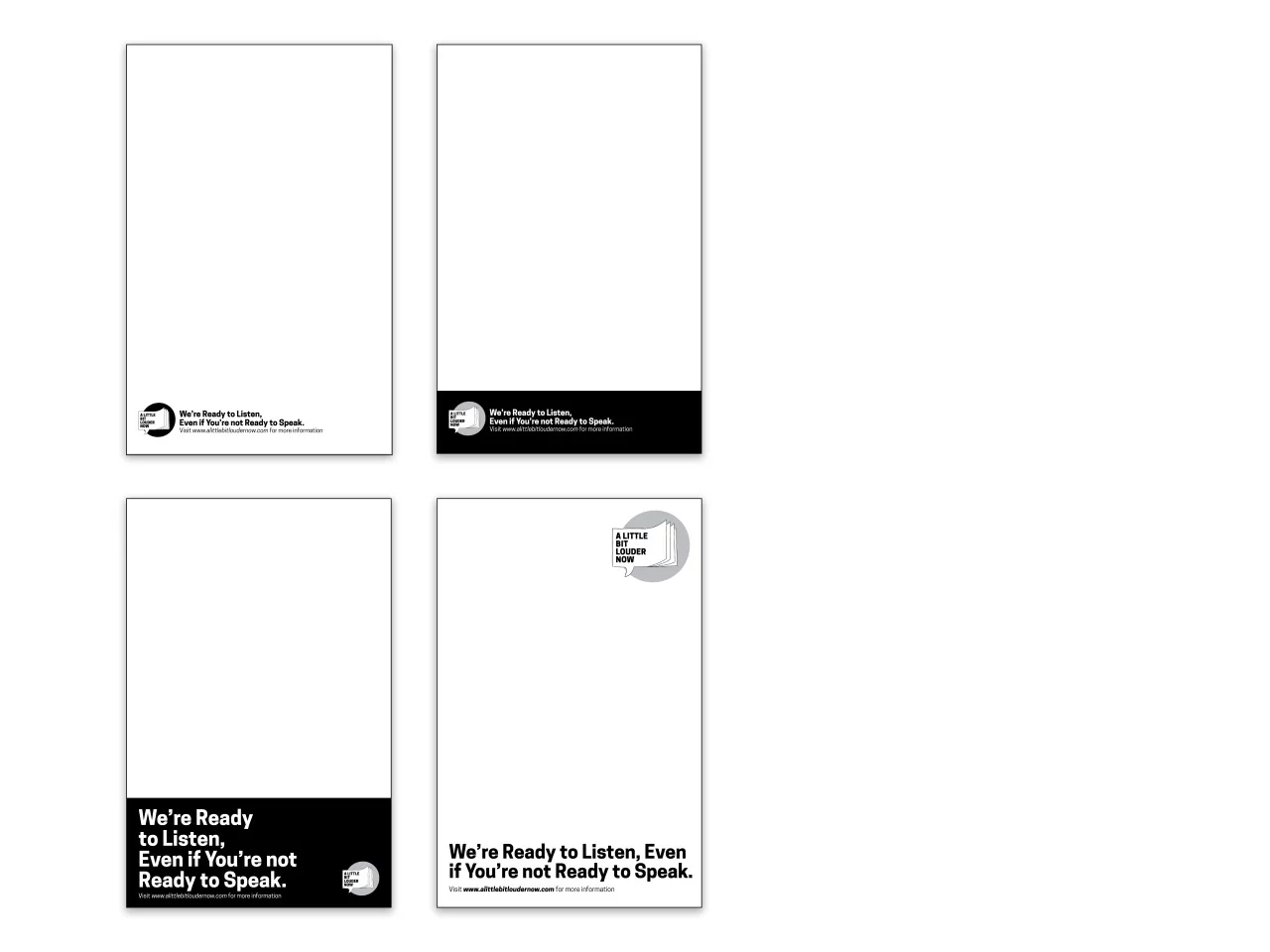
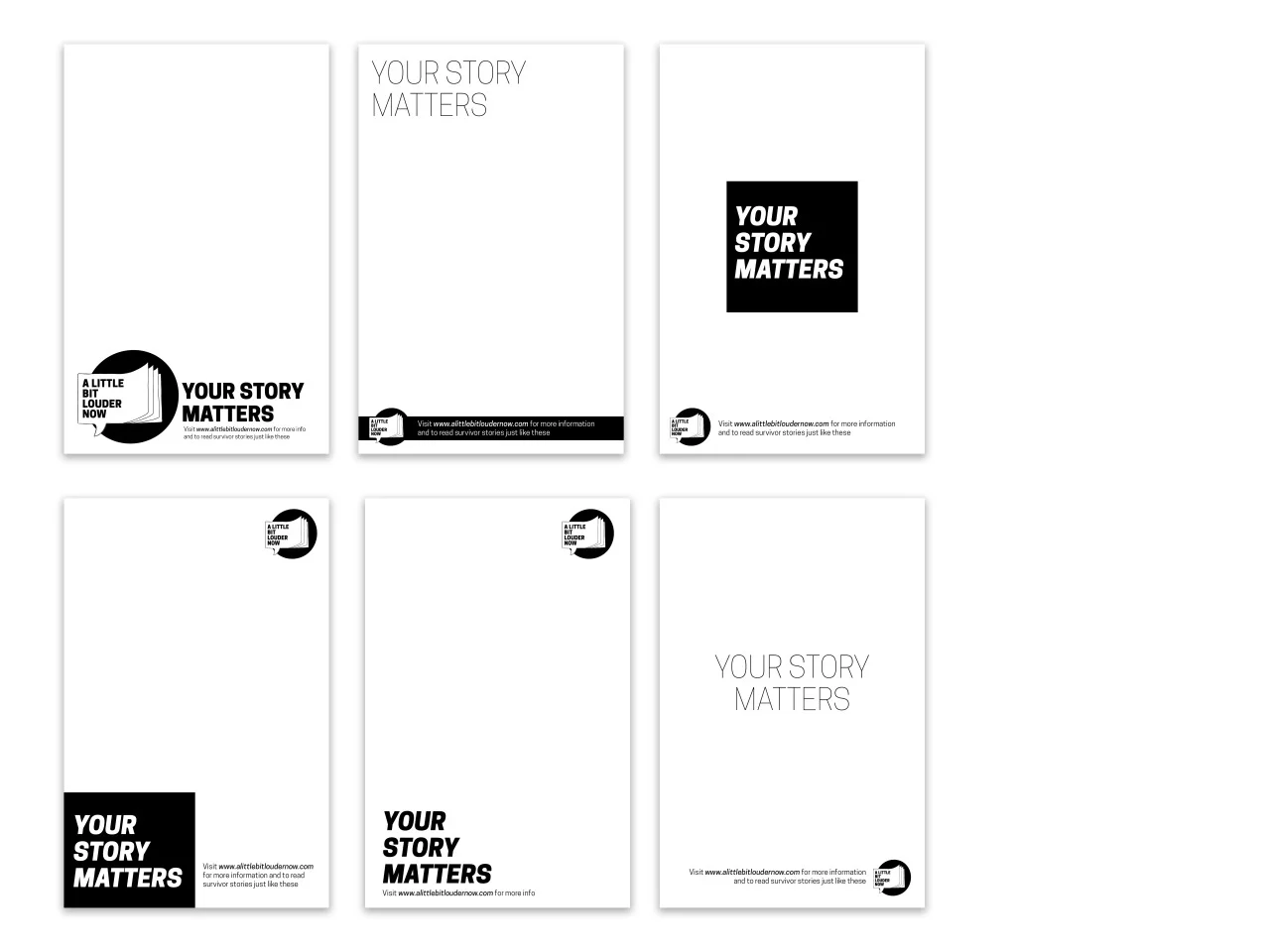
Playing with some layout/look & feel options for the poster workshop templates. The templates should be simple and the message/text straight forward - to contrast to the likely complexity of the collaged words and images the workshop participants will create.
Viewing entries tagged
sexual assault
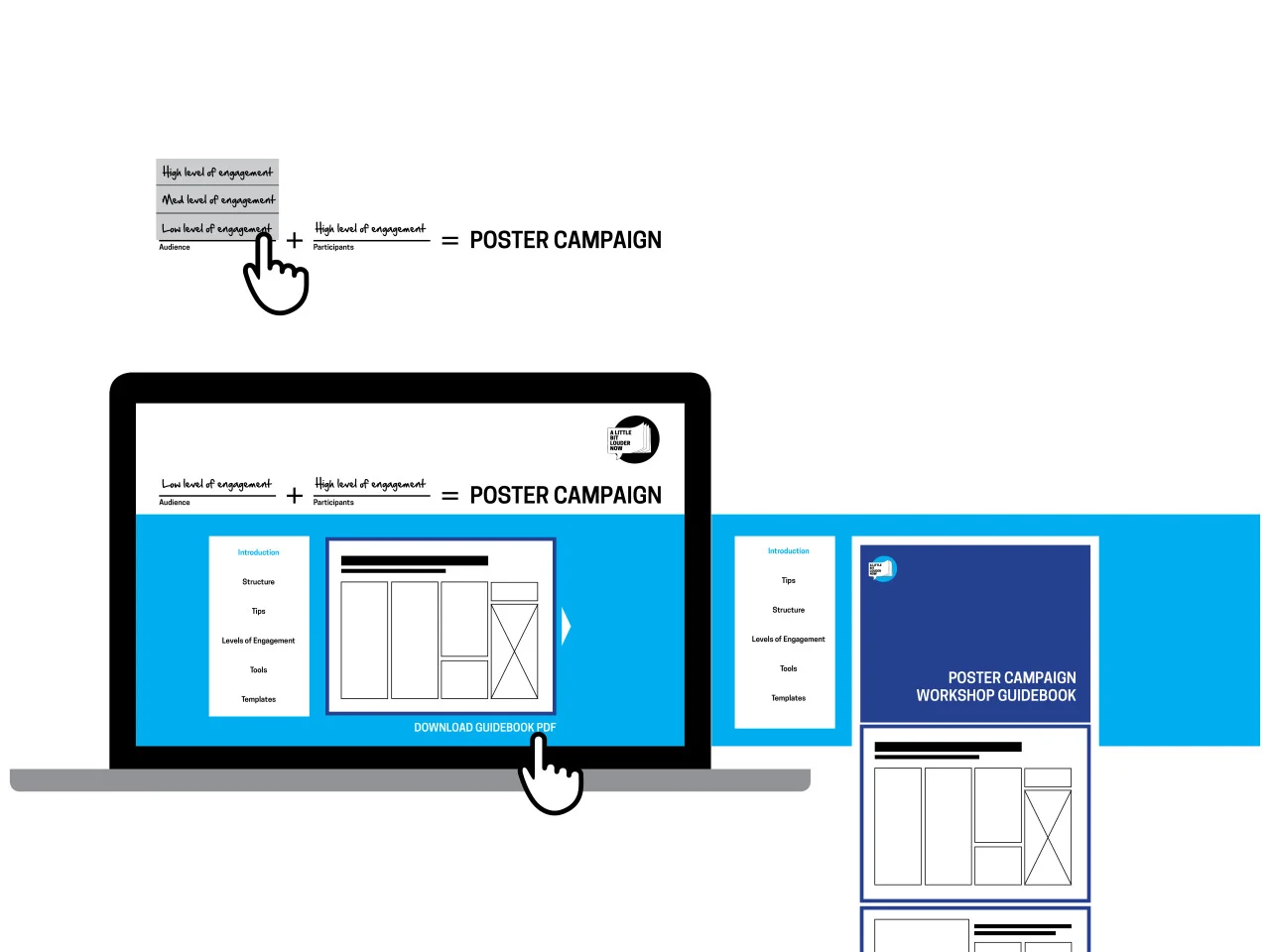
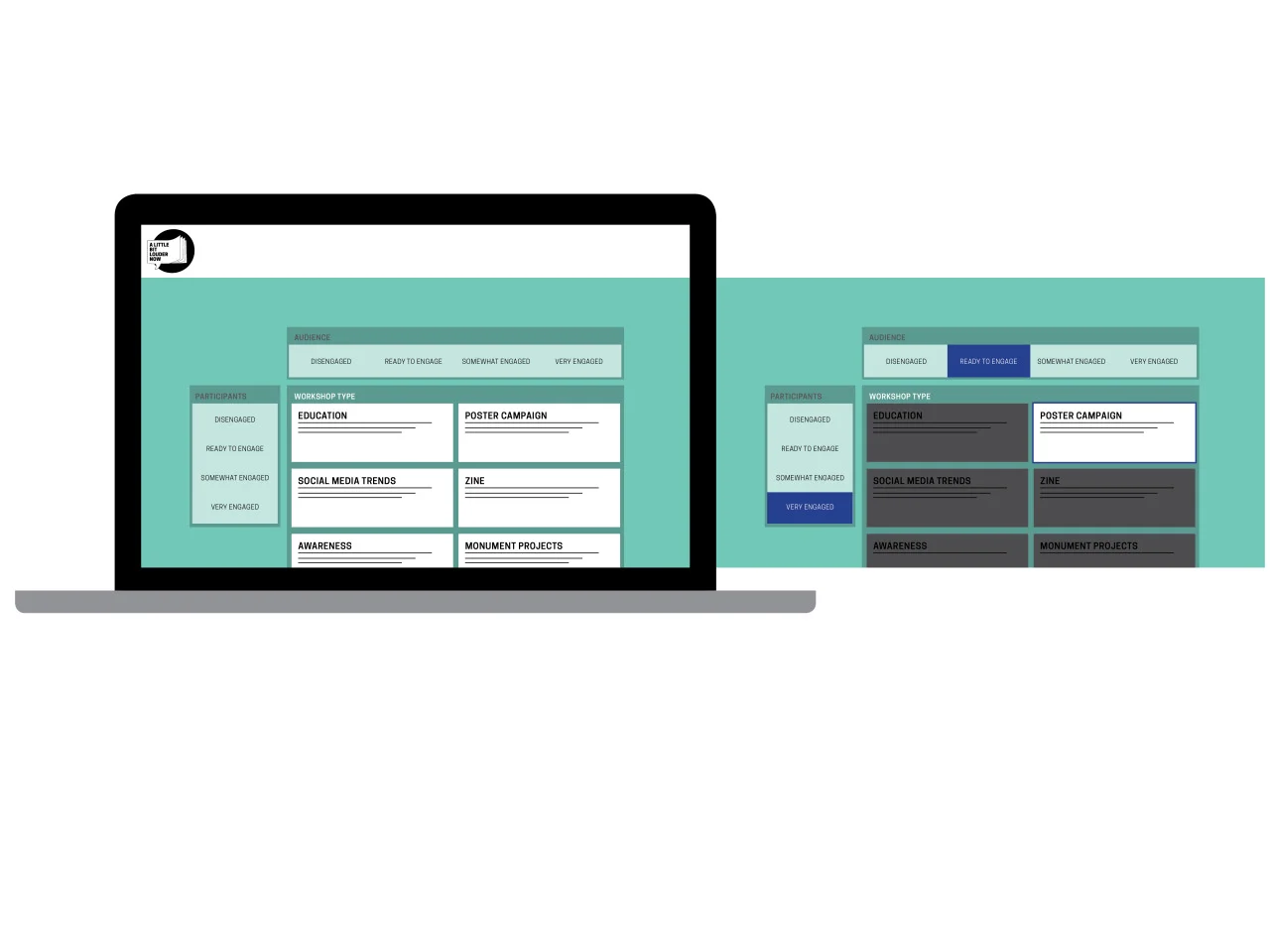
The two studies look at ways in which an advocate user can narrow down what kind of workshop she’d like to facilitate. The first option is simplified and easy to figure out, but the second option provides a matrix method in order to see all of the different options available.
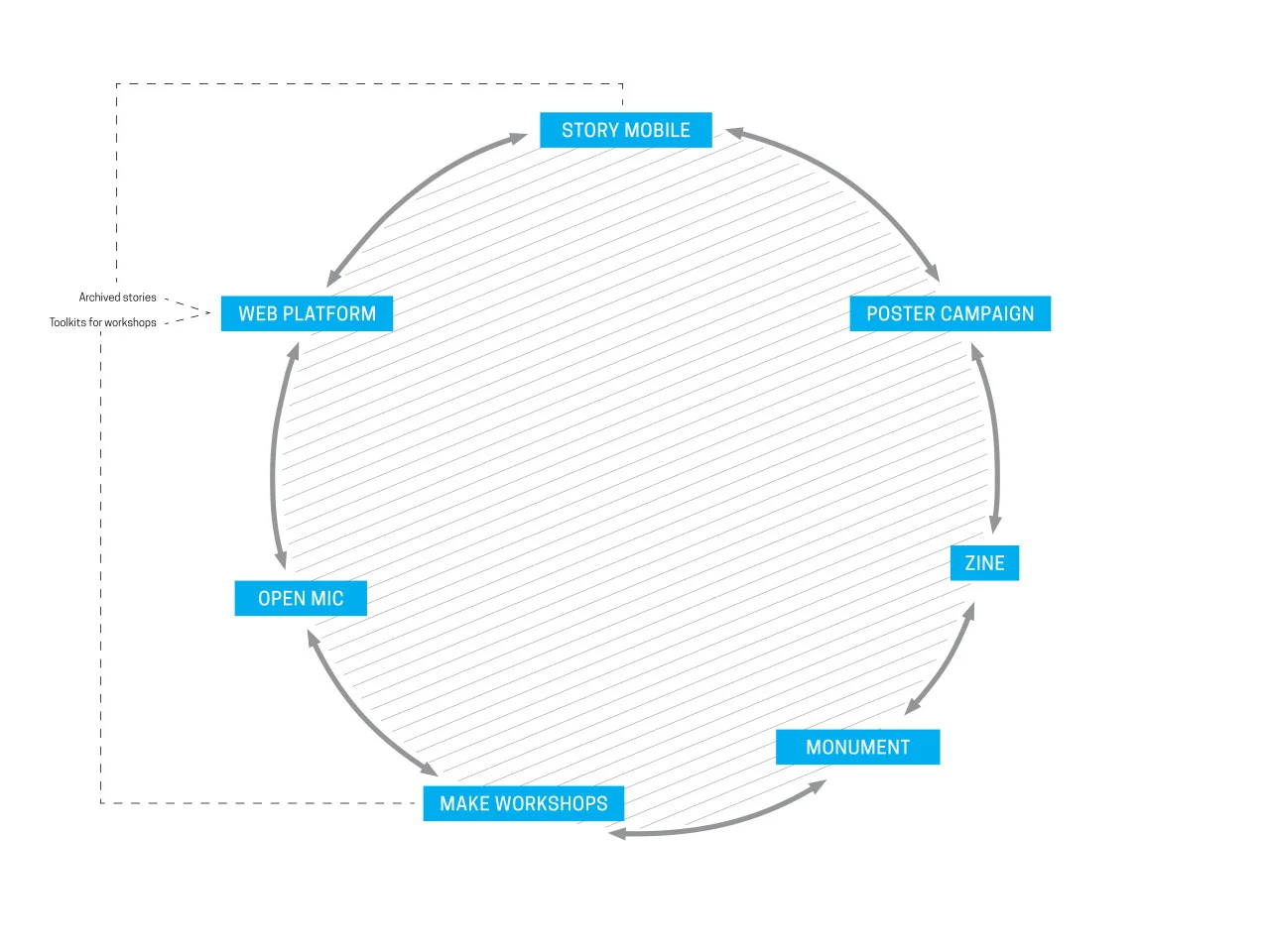
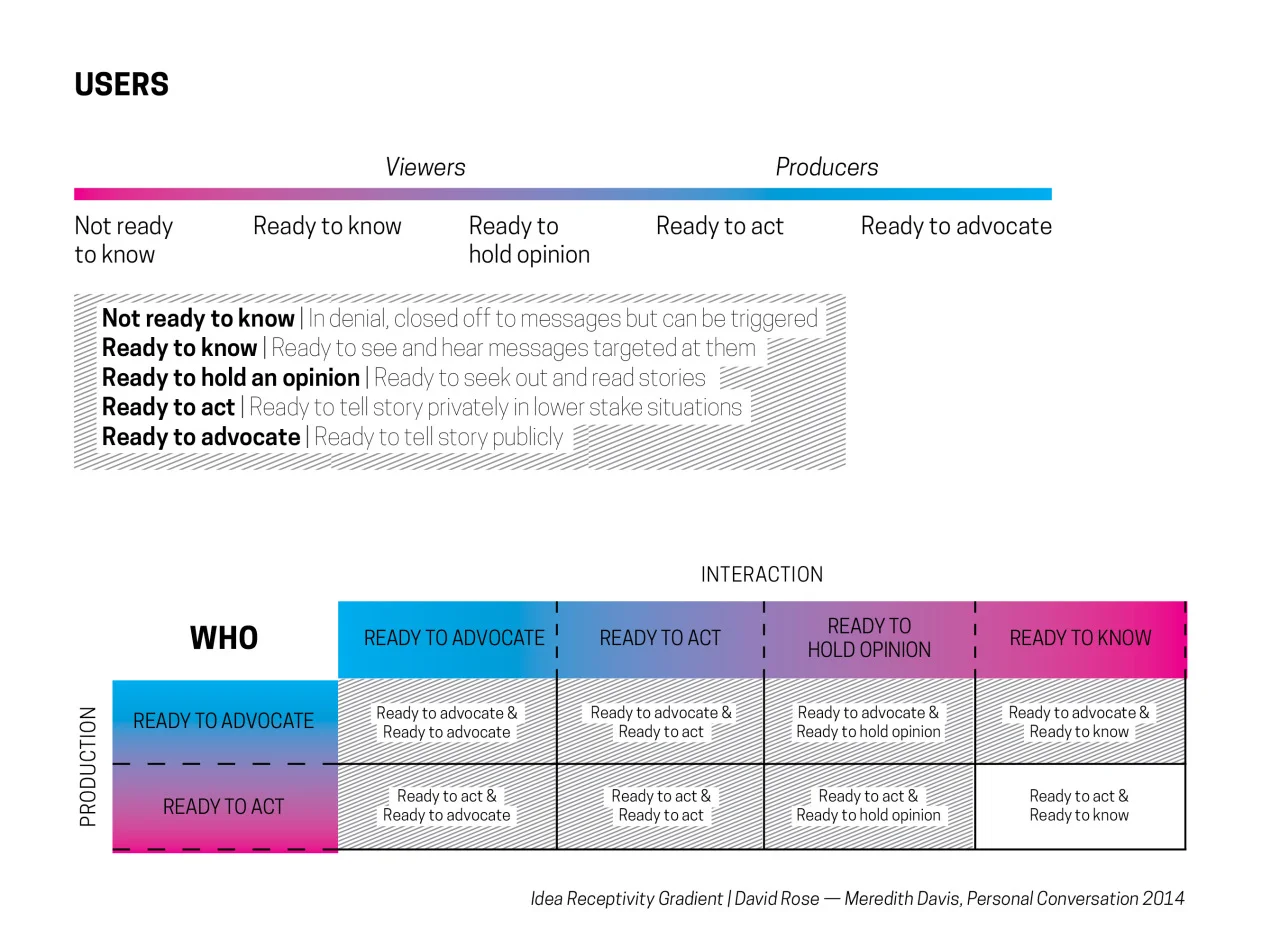
Here are larger versions of the system map and user gradient/matrix. You can access knowledge about the images in the previous “Knowledge Dump” entry.
This thesis started off as a fuzzy, pseudo Tumblr website where survivors of sexual assault could essentially blog anonymously about their experiences. It’s quickly evolving. I keep coming back to these ideas of co-creation, participatory design, and design for user generated content. In an environment where emotions are high, hysteria is likely, anonymity is cherished, and trust is scarce, what, if anything, says survivor friendly and survivor centered better than survivor created content?
My research showed me that most survivors are willing to tell their stories, if they’re given a safe space to do so. With various resources available to them, survivors should be able to come forward with their stories/experiences, whether it be for counseling, conversation, or reporting to the police. But they aren’t coming forward. While a lot of that has to do with the culture that we live in, there are opportunities to investigate from a design standpoint, why these resources aren’t being utilized to their full potential. Whether we’re talking about going to the police and reporting a rape or anonymously telling Whisper about the time your boyfriend raped you, but you didn’t know it was rape - I see these tools/services/resources as facilitators of storytelling. The problem I continue to run into, the more that I read and find out what’s out there in terms of storytelling (not just for survivors of assault), is what am I doing that’s different? If there are already tools out there for survivors to post their stories anonymously or publicly, when they’re ready, (Tumblr, Whisper, Your Voice, etc.) why aren’t more survivors telling their stories?
These differences have lead me to remember and focus on what it is about storytelling that is so powerful. It’s about shared experiences. That’s the key. Survivors talking to survivors. My research brought me to investigate the co-creation and participatory design; the idea that the tools for communication and creativity are put in the hands of the people who will benefit from the results. Inclusive/participatory design methods have developed greater collaboration with end-users and marginalized
populations. To my knowledge, participatory methods of design are generally used as a means to an end for a designer to create an artifact by including end users in the process of that design. The process is not normally used as the final artifact. I’m investigating the ways in which designers (me) can create the tools necessary for end users to take the reign and use these methods/process as the final artifact. From a production standpoint, the end users’ engagement with the process makes them more aware of the messages they’re putting out. In the context of this investigation, this means moving a ready to act participant to a ready to advocate position. It could also mean moving a ready to hold an opinion user to a ready to act position.
Precedent for this participation is the Community-Activated Design project done by Designer Clinton Carlson of the University of Nebraska Kearney. Carlson ran a workshop, leading a poster campaign on suicide prevention at the university level. By providing a framework, he engaged students, the end users of the messages, to create the posters with the use of stencils and templates. By working on the campaign with the very messages that were targeted toward them, the students’ awareness for the resources available to them regarding suicide prevention greatly increased.

I’m investigating a system that is cyclical in nature, the way that storytelling is (advocates telling stories to inspire lower levels of engaged users to tell their stories and turn them into advocates), in which a user may enter at any point. The system, which facilitates storytelling, contains varying degrees by which survivors may tell stories as well as interact with. The user often overlaps with the producers. The system is also focused, in nature, happening within the community of survivors on a particular college campus. I’m speculating that the focus is necessary in building the audience of a smaller community before it can grow as a larger one (outside of that particular campus). As users enter and move through the system, the audience grows.


The users, positioned among David Rose’s Gradient of Idea Receptivity, have vary levels of engagement and receptivity, causing them to interact with multiple parts of the system either as a producers or as viewers/actors (sometimes both). For example, a user who is ready to advocate may seek out services for facilitating a workshop that will make posters to urge other users to tell their story via the web platform or an open mic program that they will later set up.
The users are broken down into producers and interactors. Producers create the means for which stories are being told - ie advocates produce zines, hold workshops,etc. They are all the users who are publicly contributing their stories (producing messages). Interactors range from ready to know to ready to advocate and interact seeing, viewing the messages being put out or in some cases, actively seeking out and reading the messages (stories). Interactors can overlap as producers. Advocates are normally producers but are also receiving messages from other advocates (zine). The system allows for growth of interactors into producers.
The map may be incorrect in a way that implies that everything can happen at the same time (users are moving through different paths of the cycle at the same time). While users can move through different paths of the cycle at the same time, The Story Mobile is an investigation if how services for storytelling facilitation can engage users in a physical manner. The mobile is temporary, traveling to campuses for a week out of the year, but it manifests itself as a digital/web platform for the remainder of the year. Users can enter the cycle as participants of the Story Mobile (a service that benefits different levels of engagement) or because of awareness about the mobile due to earlier or current output from the service.
The touchpoints on this cycle are examples of different possible manifestations of storytelling, for example, posters are not the only way to exhibit a call to action, but they are a good example of a type of interaction that facilitates storytelling that can speak to a lower level of engaged user. There are endless possibilities of possible entry points of this system, but there is not enough time to investigate every single possibility and form of communication.
The system also provides information and tools to the facilitators of the workshops (advocates) by which the stories are being created (via posters, zines, open mics, etc.) about the decisions they will make regarding which method of storytelling is appropriate for what they’re trying to accomplish and who their audiences are. (giving advocates the means for making informed decisions based on levels of engagement/receptivity…potential to build their storytelling skills).
Disclaimer [For probably 90% of the time I’ve spent so far on this thesis (which has been a lot of time), it felt like the more I researched, the less I knew and the more confused I was. I’ve spent hours and days on end working, and I have very little to show for it (in comparison to the time I’ve put in). I know I’m late in the game, with orals being next week and all, but I am finally interested and excited about what I’m investigating…Most of this is due to the revelation and awareness of what exactly it is that I’m investigating.]